


Wondering if your thermal camera can spot sneaky troublemakers or just very warm squirrels? Picking the wrong detection range can turn serious surveillance into an accidental wildlife documentary.
Match your EO mobile thermal camera to real-world distances using proven detection formulas and field data from industry research like the U.S. Army target acquisition report to size lenses, sensors, and zoom correctly.
📡 Key Factors That Determine EO Mobile Thermal Detection Range
EO mobile surveillance thermal camera range depends on optics, sensor resolution, processing, and environment. When you match these parts well, you gain stable long-range awareness.
Understanding each factor helps you choose the right system and set clear performance expectations for patrol, border, and critical site protection tasks.
1. Lens Focal Length and Optical Quality
Lens length shapes how far you see and how wide you cover. Longer focal lengths reach farther but narrow the field of view.
- Short lens: wide view, short range
- Long lens: narrow view, long range
- High-quality glass reduces blur and boosts detail
2. Detector Resolution and Pixel Pitch
Detector resolution sets how much detail the thermal camera can draw at distance. Smaller pixel pitch often gives sharper long-range targets.
| Resolution | Use Case |
|---|---|
| 384×288 | General patrol |
| 640×512 | Long-range, high detail |
3. Image Processing and Algorithms
Modern EO mobile systems use noise reduction and contrast enhancement to make small, distant targets stand out against complex backgrounds.
- Automatic gain control for steady brightness
- Edge and detail boost for small targets
- Smart tracking to hold moving objects in view
4. Environment, Atmosphere, and Target Size
Fog, rain, heat shimmer, and smoke all reduce detection range. Larger and hotter targets naturally appear at longer ranges.
- Clear nights give longest ranges
- Dense fog and heavy rain cut distance
- Background temperature affects contrast
🔥 Comparing Detection, Recognition, and Identification Distances in Thermal Imaging
Thermal performance is not just one distance. You must compare how far you can detect, recognize, and identify a target.
Each distance changes with optics, sensor, and software, so knowing these levels helps you design safer mobile surveillance routes.
1. Detection Distance: “Something Is There”
Detection range is where the system first sees a heat source. You know a target exists but cannot tell what it is yet.
- Used for early warning
- Longest of the three ranges
- Helps trigger alarms and auto-tracking
2. Recognition Distance: “Type of Target”
Recognition range is shorter. Here you can tell if the target is a person, vehicle, or animal, which guides fast response choices.
- Supports rule-based alerts
- Important for border and road checks
3. Identification Distance: “Exact Class”
Identification distance is where you can clearly see target class, such as truck vs. car, or person with or without load.
| Level | Detail |
|---|---|
| Detection | Presence only |
| Recognition | Target type |
| Identification | Target class or role |
4. How Lens and Sensor Change These Ranges
Longer lenses and higher resolution push all three distances farther, especially identification, where small features matter most to operators.
- Zoom optics extend recognition
- Fine pixels help separate close targets
- Good processing stabilizes ID at range
🚙 Mounting Positions on Vehicles and Their Effect on Thermal Coverage
Mounting height and position strongly affect blind spots, horizon reach, and overall EO mobile thermal coverage on moving platforms.
Smart placement also protects the camera from vibration, dust, and crash damage, giving more stable images and longer service life.
1. Roof-Mounted Thermal PTZ Units
Roof mounting gives the highest view and the longest clear line of sight, ideal for wide-area and border patrol coverage.
- Minimal foreground clutter
- Best overlap with visible EO cameras
- Works well with radar and LRF cues
2. Bumper or Grill Mounting
Low mounts see better through fog and dust close to the road but can lose far-horizon reach and suffer more vibration.
| Pros | Cons |
|---|---|
| Great for road hazards | Shorter horizon |
| Lower atmospheric distortion | Higher risk of impact |
3. Mast or Elevated Deployable Mounts
Telescopic masts let you raise the EO/IR system when parked, giving semi-fixed long-range overwatch from a mobile platform.
- Ideal for temporary checkpoints
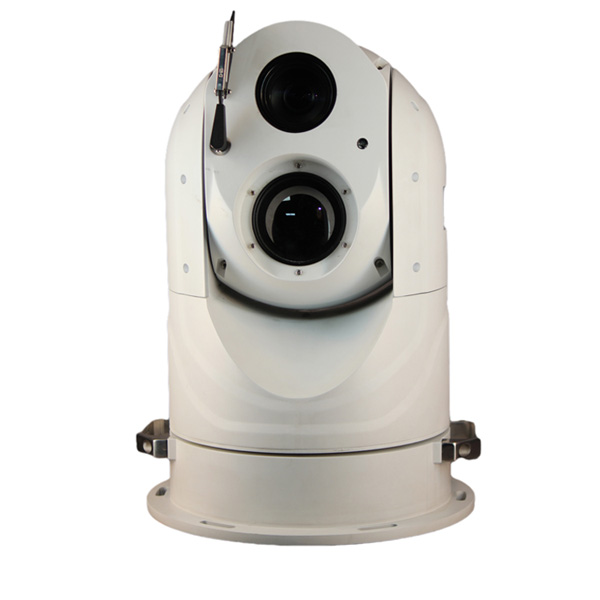
- Pairs well with Long-Range Heavy-Duty Thermal PTZ | EO/IR Multi-Sensor, 25–225 mm, 10 km LRF
- Keeps vehicle free for other gear
🌙 Optimizing Settings for Nighttime, Fog, and Adverse Weather Performance
Fine-tuning EO mobile thermal settings can greatly improve range and clarity in darkness, fog, smoke, and mixed lighting scenes.
Use profiles for different weather so operators switch quickly without deep menu work during urgent missions or rapid pursuit.
1. Nighttime Gain, Contrast, and Palette Choices
At night, automatic gain and right color palette help you see more detail without eye strain during long patrol shifts.
- Use high contrast for small targets
- Pick simple palettes like white-hot
- Limit noise with smart smoothing
2. Handling Fog, Rain, and Dust
In fog and rain, reduce digital zoom and let the sensor work with stable optics and tuned noise control for best clarity.
| Condition | Tip |
|---|---|
| Fog | Lower contrast, avoid over-gain |
| Rain | Use wider field to avoid smear |
| Dust | Clean window often, shield airflow |
3. Automatic Profiles and Operator Training
Preset profiles with fixed gain, sharpness, and palette keep image quality stable and reduce operator load during stress events.
- Day, night, fog modes
- Short training on when to switch
- Use logs to refine settings
✅ Why Soar EO Mobile Thermal Systems Excel in Long-Range Surveillance
Soar EO mobile thermal platforms combine strong optics, precise mechanics, and smart processing to deliver reliable long-range coverage for demanding users.
They integrate easily with radars, GPS, and recorders, so teams gain a single, clear view of wide and complex areas.
1. Heavy-Duty Long-Range PTZ Platforms
Soar heavy-duty PTZ units use strong housings and long lenses to stay stable on moving vehicles in harsh climates and rough routes.
- High-torque pan-tilt drive
- Long focal length thermal optics
- Rugged IP-rated enclosures
2. Multi-Sensor and LRF Integration
Many Soar systems combine thermal, visible EO, and laser rangefinder in one head, giving full target data from a single line of sight.
This is key in solutions like the Multi Sensor LRF PTZ Camera, which supports precise distance reading for mobile units.
3. Tailored Focal Lengths for Specific Missions
From medium patrol ranges to extreme stand-off needs, Soar offers lens sets that match target size, terrain, and threat profile.
For example, the 150mm Thermal Dual Sensor Long Range Heavy Duty PTZ balances long reach with flexible vehicle mounting options.
Conclusion
EO mobile surveillance thermal camera range depends on optics, sensors, processing, and environment. When you understand these factors, you can design patrols and choose gear with clear expectations.
Soar long-range EO/IR systems bring these elements together in rugged PTZ platforms, helping teams detect, recognize, and identify threats sooner and with greater confidence.
Frequently Asked Questions about EO Mobile Surveillance Thermal Camera
1. Do thermal cameras need any light to work?
No. Thermal cameras read heat, not visible light. They work in total darkness, which makes them ideal for night patrol and covert observation.
2. Can thermal cameras see through glass or water?
Standard thermal cameras cannot see through glass or water. They detect surface temperatures, so glass appears as a reflective barrier, not a clear window.
3. What limits the maximum detection range most?
Lens focal length, detector resolution, and weather are main limits. Fog, heavy rain, and heat shimmer can cut range more than optics alone.
4. How often should I calibrate or maintain the system?
Follow the maker’s schedule, but for mobile setups, check mounts, connections, and window cleanliness before each shift and do full service yearly.
5. Are EO mobile thermal systems legal to use everywhere?
Laws differ by country and sector. Always follow local privacy, export, and data rules, especially for border, city, and critical site monitoring projects.


 Privacy settings